Showing posts with label L.A.. Show all posts

Tuesday, May 1, 2012

May Day 2012

    TODAY ANGELENOS, will need to give themselves even more extra time to get from point A to point B. Today, May 1st 2012 there will a protest organized by Occupy L.A. The protest is planed "around a “4 Winds” People’s Power Car and Bike Caravan through the urban sprawl of Los Angeles that will culminate in Direct Action in and around the Financial District of downtown LA." According to the May Day website the protest will be, "beginning in the late morning, coming from the North, South, East & West, will be an amalgam of cars and bikes, occupiers and unions, community orgs and organic communities — taking over our streets on routes designed to bring to light to societies ills, past and present, and engaging with residents and workers as we connect the disparate voices, races, classes and nationalities that make up Los Angeles. The caravans will stop at flashpoints along the way. Flash occupations, food giveaways, and other direct actions targeting the foreclosure crisis and police brutality will be undertaken at these flashpoints on our slow, city-paralyzing, carnival-esque descent into the center of the city." What this really means is even more traffic! For those of us who have finals today, be sure to give yourself plenty of time to get to school since the traffic may be even more ridiculous than normal due to the wet roads from last night's rain and L.A.'s 99% occupying our roads.


When I was in the art district a few weeks ago I stumbled upon the cloth advertisement with May Day 2012 spelt out in red and green with a heart of the A that reads "Somos 99%." I liked the advertisement, and not knowing what May Day meant I took it down to take home as a souvenir from my trip to city when I ventured out from the South Bay.
.


-Nastassja Habers
-Photo Credit: Nastassja Habers

Little Ethiopia


I WANTED to explore an area in Los Angeles that I had only visited a couple of times but have always wanted to go back and visit. The community/neighborhood is Little Ethiopia. Little Ethiopia is located on Fairfax Ave. between Olympic Blvd and Pico Blvd. To be more specific, it is located 5 minutes east of Beverly Hills and 10 minutes south of Hollywood hills, 15 minutes Universal Studios, 15 minutes to Downtown L.A., 20 minutes to Santa Monica, Venice Beach and LAX on Fairfax Avenue this newest LA Ethnic enclave was christened in 2001.


I was able to browse an Ethiopian store, which is definitely one of a kind and talk to the owner’s son about the store's life (or working life since no one actually lives here) in Little Ethiopia. He preferred not to be named or photographed because he said he was shy. But he was still very helpful in giving me details about LE and letting me take pictures of the store. His mother founded the store in the early 1990’s and it has been a staple in the Ethiopian community for more than two decades. Currently his mom is in Ethiopia, she left for six weeks to pick up new items and bring them back to the store. It is very important to her to have authentic clothes from their country. He said it would be insulting to their customers if they tried to pass off U.S. made clothes as Ethiopian. Everything is imported no matter if it is at a greater cost to the owner and the store because it is a point of pride that they are able to provide their community with little pieces of home.


Little Ethiopia is a really small area physically and socially, so everyone knows everyone and there is a little bit of competition since there are so many restaurants in the area. I was even able to get inside details about each of the restaurants and their owners which was very interesting. For example, one restaurant has never been filled to capacity and everyone in the community knows it’s not a very good restaurant and the only way that particular restaurant stays in business is by attracting tourist and non-locals. In fact I was shocked to learn that the best Ethiopian restaurant, which always has a waiting time of about an hour to be seated, is actually not in Little Ethiopia on Fairfax Ave! It is a couple of streets over on Olympic Blvd., but that is still fairly close to LE and the central focus of the community, which is Fairfax.


Finally we talked about his life for a few min. I found out that he doesn’t wear traditional Ethiopian clothes because he feels that when in traditional garb he sticks out and that makes him feel uncomfortable. Even in LE he doesn’t like to wear traditional Ethiopian clothing because LE is not the only place he is in. He works in LE, lives in another part of Los Angeles, while visiting friends in a completely different part of the city. He expressed that it is hard for him to be a chameleon and change his clothing according to what he is expected to wear.


--Julian

Photo Credit: Myself


Wednesday, April 25, 2012

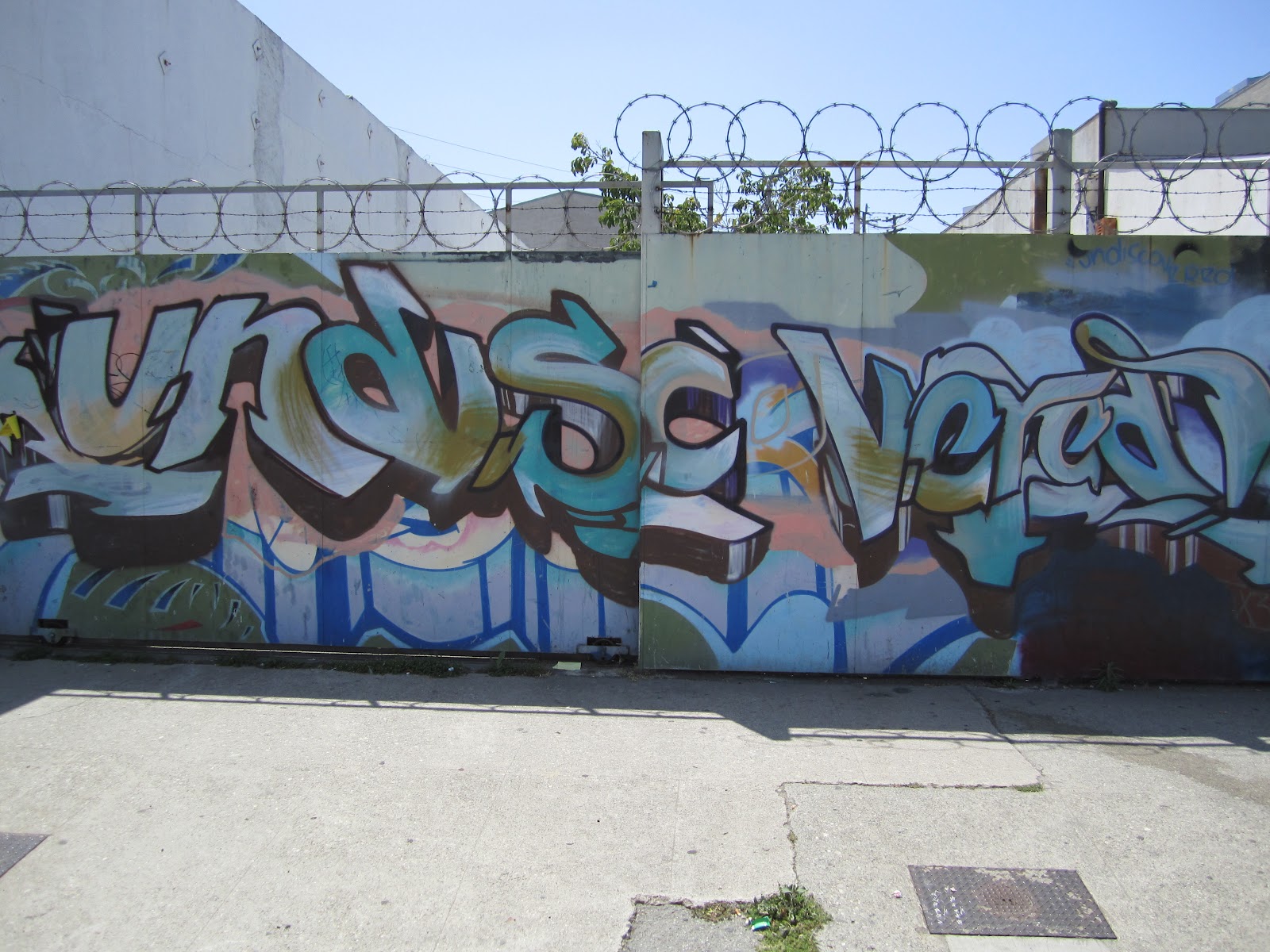
Genius Loci: Painting L.A.'s Story


Earth Crew "Undiscovered America" for L.A. Cultural Affairs

Photo Credi: Nastassja Habers - Taken in the Art District

Tuesday, April 24, 2012

What is it Like to Beat LA?


LOS ANGELES has a temperamental attitude.  One minute it is spitting fire through the brushes in Malibu while the thick dry winds blow, when suddenly the sky turns deep gray and large raindrops cut through the smog that is as thick as the scandals that surround the city. Until finally the sky is clear again, but only for a moment, because the winds have begun again bringing blood shot eyes of the city dwellers with it. LA is a volatile boss, a big CEO of a production company, and when the newcomer enters into his realm he throws everything he’s got at the innocent intern. LA is constantly testing those who inhabit this town of insanity, because it is only those who can handle its mood swings that survive. If you don’t watch your back, LA will swallow you whole and spit you out with crazed eyes, bloodshot from the wind and smog.  One who came into this atmosphere as a youthful amateur of LA and came out alive and on top of the city is Larry Welk III.

Today, Welk is the president of Angle City Air, but back in 1990’s, he was only a newcomer in the field of news reporting from the air.  He held a camera to film while the pilot steered a helicopter through the LA’s battlefield. He was merely an intern, innocent to LA’s constant attitude problem.  “I was constantly biting off more than I could chew, but LA taught me how to deal with the unexpected,” Welk remarks about his first days in the sky. 

One unexpected event occurred in 1990’s.  LA decided that it was rain was going to fall.  For days, sharp rain sliced through the sky filling every nook and cranny of the city with water.  LA has trained it inhabitants against the Santa Ana’s and fires, which leaves the people of the city dumbfounded against water.  It wipes the city clean, yet leaves so much danger in its midst.  On this day, however, it rained so much that the LA River began to flood and the current crashed in the Sepulveda basin where the current would destroy anyone who got too close.  The city was in turmoil, not knowing how to handle this foreign moisture flittering from above. Welk was covering the chaotic events occurring on the ground through his lens above.  It was at the conclusion of this stormy week; there were car accidents, flooded streets, and a flooded river.  Young Welk and the crew flew back and forth between a press conference the LA Fire Department was holding and footage of the flooded river.  Moving in time with LA’s irony, “the Captain of the Fire Department just announced that they had the flood under control and the public was safe, when I saw a man in the river,” Welk remarked, his eyes growing wide.  “We called the Fire Department, but they didn’t believe us.  Apparently, they already rescued everyone who was in danger.” 

The man went under.  He disappeared below the dirty, gray surface.  Welk set his camera aside and told the pilot to take him down. Then, he jumped. Welk jumped from the helicopter into the Sepulveda basin and grabbed the man.

The pilot filled the copter around and personally picked up the rescue team.

But LA wasn’t done with him yet.  The currents crashed and thrashed them, while Welk attempted to keep himself and the man attached to his body alive. 

“It was one of the biggest struggles I have ever experienced.  It was unreal, like I was in a dream and survival mode just kicked in. If my pilot hadn’t flipped around and picked up the rescue team I would have died.”
Welk was a hero.  He risked his own life to save another.  He went into LA’s battlefield, outsmarted his brutal boss that gave him everything nature’s got and prevailed, survived, passed the test.  This drive has given Welk the courage to combat LA’s temperament every day since then.  He has covered fire storms, traffic, bank robbery shootings, and car chases, all results of LA’s insanity and has come out alive, on top and with the best story LA could have produced. 

-- Elise Fornaca
 Photo by Mark Luethi via the LAist Featured Photos 


Wednesday, April 18, 2012

Summer Sounds in Los Angeles


"Single Fins & Safety Pins" by Japanese Motors was a song I never knew I had until just today when it popped up on my iTunes shuffle. I'd probably downloaded it for free in some distant time of my musical wanderings online, and it got lost in the mix. For a moment, I considered switching the track until I listened closer to the lyrics and found that it was a song written about summer in Los Angeles. 


What I found was that the music video and lyrics replicated much of what we've talked about in class: this glamorized idea of LA, where beach babes suntan abundantly and you can "kick your shoes off and just unwind". Once outside of the clutches of congested freeways, the band members sing out their love for a carefree beach-bound summer. 


I thought the music video was funny, with its 50s-inspired glam vintage look that my generation tends to wistfully attempt to replicate. The video's got this rebel-without-a-cause feel with the band members rockin' out oceanside. Even when the waves try to overtake them, they keep on jamming, breaking guitars and mounting fury against the forces that rise against the sounds of their song. I don't quite understand why all the musical equipment need go to waste in such an unnecessary way, but some might say differently. Perhaps they are true to the spirit of Los Angeles: a distinctive voice that refuses to be suppressed. Or, they could be unfortunate perpetrators of the pretentiousness associated with L.A. and the music industry.  

Either way you see it, the song and video still merits enjoyment. Although it may not be a true representation of all our lives in Los Angeles, I can definitely appreciate the fun-loving spirit and carefree attitude on a hot, summer day at the beach that this song embodies. 

Single Fins & Safety Pins by Japanese Motors

Well I'm stuck on the 405
Red lights, traffic... I don't really dig that vibe
Trying my best to carry on
But the traffic's, no fun, in the summer
I said...so come on down

To the beach where the sun shines
Kick your shoes off and enjoy some wine
When the sun is shining in the summer
The summer time...
More the merrier, don't be a bummer
Dance like the waves of summer
Thank your momma for the summertime
The summertime

Drop your pants and grab your shades
And those single fins
Tell your girl to grab her suit
Weell come on...make it soon
We got time..the weather is fine,
To lay around all day
Hey dudes...what about that new swell
It's going to be breaking in the bay

Do you see the sun when it shines
Don't you know you can get so wild
When the sun is shining in the summer
The summertime...
More than ever, don't be a bummer,
Dance like the waves of summer
Well the sun is shining 
The summertime

I don't even know how much pain you've put me through
I just want to tell you baby
I'm giving up on you

To the beach where the sun shines
Kick your shoes off and enjoy some wine
When the sun is shining in the summer
The summertime...
Don't got a bike, you can borrow mine
You get drunk off and enjoy wine
When the sun is shining in the summertime
The summertime


-- Jennifer Pellerito

Tuesday, April 17, 2012

Saigon Dish: The Best in Los Angeles


MY FAVORITE thing about Los Angeles is that it is home to Saigon Dish, arguably the best Vietnamese restaurant with the best prices in Los Angeles. The small restaurant is located in Lawndale off of Hawthorne Boulevard and Manhattan Beach Boulevard. I discovered Saigon Dish when I was fifteen and have been a repeat customer ever since, and is the first restaurant I go to if I have been out of town for a while. However, the delicious food is not the only reason I find my self returning for the high school special, which is not on the menu and is known by few.
The owner John remembers every face and name of his returning customers, even if they’ve only come in once before, and he somehow creates the feeling of eating at a good friend's house and not in a room full of strangers. John will also have a chat with you before asking you for your order, though if you are a repeat customer he probably already knows what you want. The restaurant is decorated in a simple fashion. There is a row of tables on each side of the restaurant and in the middle, tables are pushed together for big parties or when the lunchtime rush arrives. Each table has Sriracha sauce, Brown sauce, and chili paste, and red and white paper placemats with the Chinese zodiac. There are two paintings, one on each wall. Saigon Dish doesn’t need to try very hard to draw in customers like other Vietnamese restaurants that need catchy and comical names like “Pho Sho” or “Pho Ever.” People keep returning because of John’s hospitality (which is hard to find in a restaurant these days) and the inexpensive and tasty food.
Nothing on the eight-page menu is over ten dollars. The most expensive dish is called Com Bo Luc Lac, which is marinated diced cubes of filet mignon, stir-fried onions and rice, and goes for $9.90. But if you know about the high school special, you can get a smaller portion of this plus a small warm bowl of Pho, which is a noodle soup, usually served with thinly sliced beef that cooks in the broth of the soup for under ten dollars! And if you are really hungry you can ask for a bigger sized portion of either the Pho or the beef for a little bit more. Everything on the menu tastes fresh from the Pho to the spring rolls. And usually when you find yourself in a restaurant that offers cheap food they only accept cash, but this little gem accepts cash or plastic. The only flaw I can find with Saigon Dish is that it is closed on Sunday. I have tried plenty of other Pho restaurants in Los Angeles, New York, and even London, but nothing comes close to the taste or atmosphere of Saigon Dish. I recommend all lovers of Pho and Vietnamese food, and those who have never tried it to go check this place out, and I guarantee you will not be disappointed and might find yourself returning on a weekly basis like myself.
-Nastassja Habers
-Photo Credit: Nastassja Habers (I couldn't resist eating some and putting Sriracha sauce all over my food before i snapped a picture.)

Friday, April 13, 2012

Scribes and Saints: J. Michael Walker Visits Telling L.A.'s Story

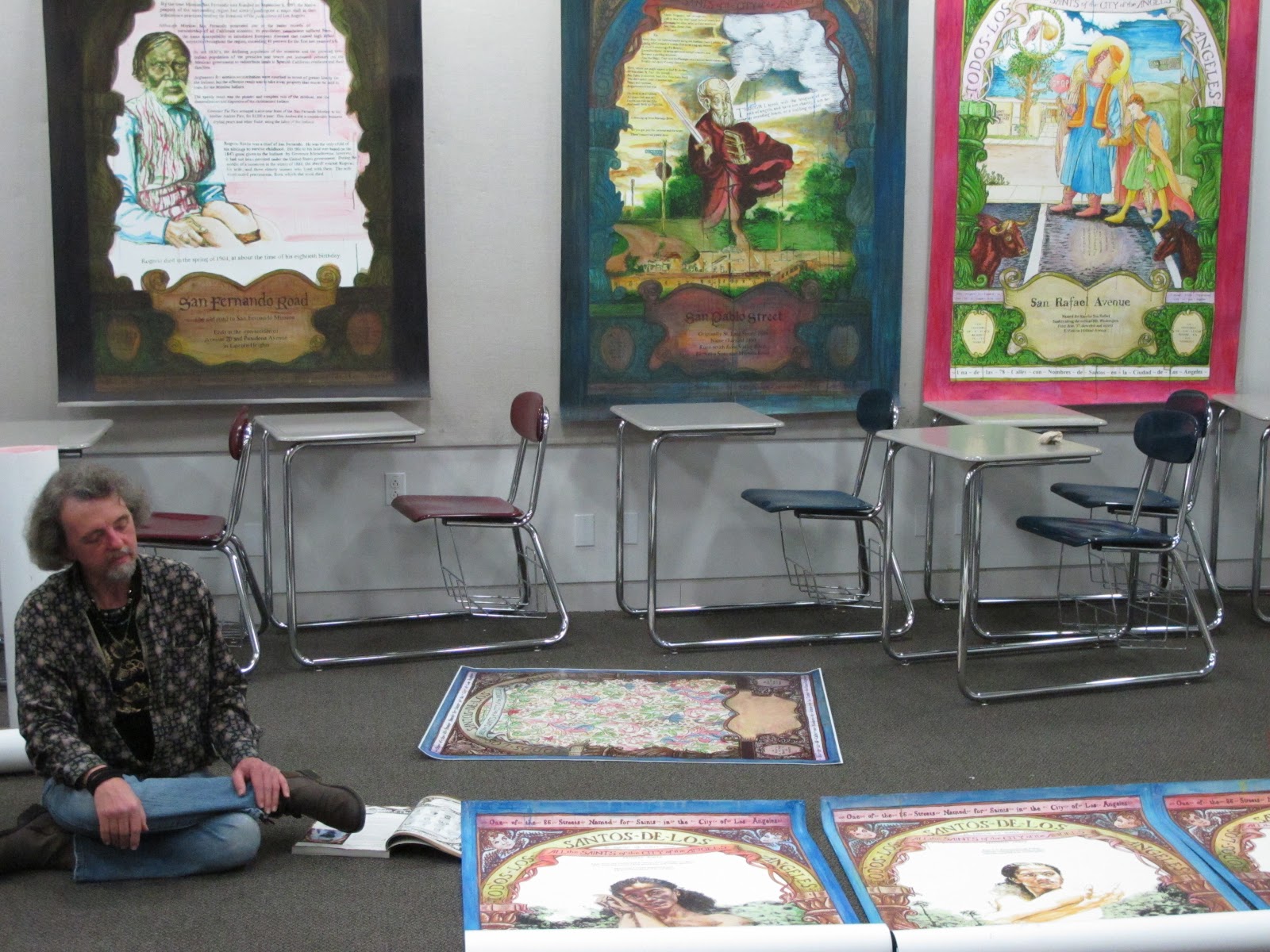
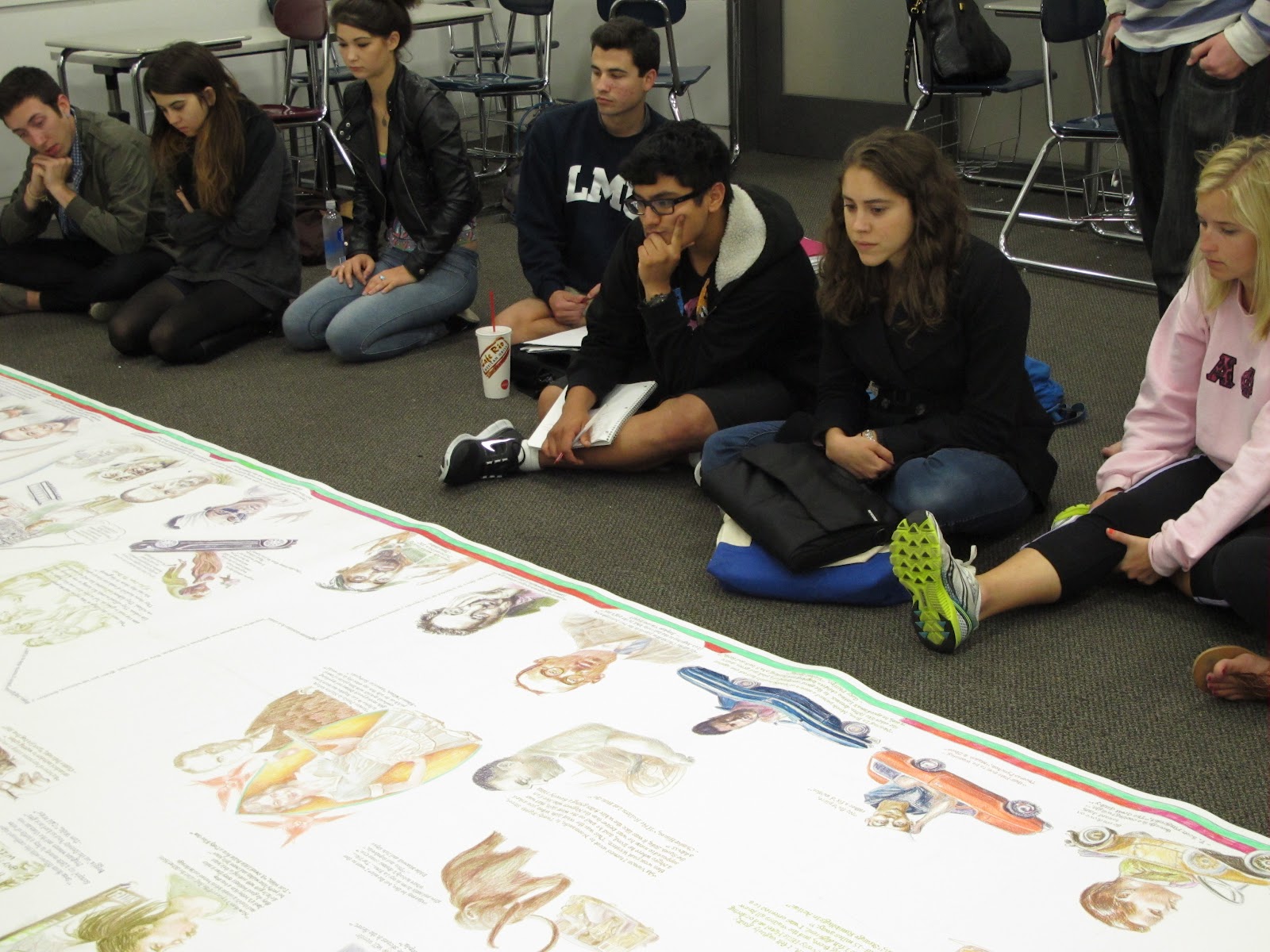
THE ARTIST, J. Michael Walker spoke to "Telling L.A's Story" on Wednesday night. He brought along with him  two of his long-term projects. "All the Saints of the City of Angels" and his literary map of Los Angeles: "Lyrical Map of the Concept of Los Angeles.

  Here are a few pictures from the evening


The Map and its Legend

Scene/Set Change

Some of "All the Saints"

J. Michael Walker


photo credit: L.G.

Monday, April 2, 2012

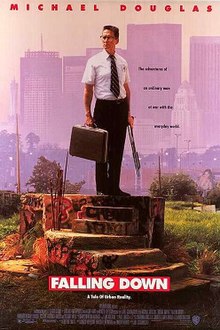
Reaction to "Falling Down"


MOST OF  the time when I think of Los Angeles I think of the positives - good weather, diverse people, lots of things to do etc. After watching the movie Falling Down, it made me more aware of some of the drawbacks of the city; ones I knew existed but often did not think about because I was too busy thinking about the things I liked. .

The first thing this film brought to light for me was frustrations with traffic. I have lived in Los Angeles for close to three years now and there was a point where I felt like I was getting used to dealing with the ridiculous amounts of traffic within the city. The film begins with William Foster stuck in a seemingly endless line of cars not moving at all. We don't know what is going on with his character yet besides a desperate desire to get out of the traffic jam, so he gets up out of his car just leaving it in the traffic and walks away. About a week after we watched the film, I was in a similar rut of traffic and almost considered doing what William Foster had done in the movie. Even though when rationally thought about as it being "just traffic," the reality is that it is a large source of stress for a lot of people and not particularly easy to overlook.

Another thing Falling Down made me think about was the reality of gang violence in the city. Although West LA and Westchester are pretty safe areas, there are a lot of places in the city plagued by gang violence, and this was even more of a problem in the early 1990's when the film was made. William Foster gets in an altercation with gang members for being in their area, crossing into their territory. I feel grateful I do not live in such an area, and seeing a reminder of this made me feel for those who do have to live in such areas.

A final thing the film Falling Down does portray are racist tendencies of many in the city. The main Latinos shown in the film are those in the gang, and at the beginning of the film Foster destroys a Korean storeowner's market because he has a heavy accent. Later, he runs into the Army surplus store of a white supremacist who appears to hate just about everyone. Although it is not something that I have experienced really living here, it is something I know goes on for a lot of people.

This film was a good reality check, and although I still love Los Angeles as a city it made me realize that everything is not perfect here. If anything, it made me appreciate what I do like about the city even more.

-- Derek Dellovo
photo via wikipedia

Sticking To The Familiar


THERE IS  a popular trend among Angelenos, myself included, to stick to the familiar and refrain from venturing out from their neighborhood. There is so much of Los Angeles that I have never seen, that I have missed out on because I rarely leave the South Bay. Why sit in traffic to go to a restaurant, store, or a park when all these things can be found in my neighborhood. Knowing that what should be a fifteen-minute drive can easily be a thirty-minute or longer drive makes it very hard to find the motivation to go explore Los Angeles. I think if Los Angeles had better public transportation more Angelenos would venture out and explore their city.
The only time I find myself on the other side of LAX is when I am going to school. There have been countless times when I have been driving an LMU student home, or out to lunch, and they have to direct me and tell me which streets are which once I get to them. Saying, “Turn on Washington,” means nothing to me and I would probably go right past Washington. My friends have joked around by saying, “Do you even go to LMU?” because I am like someone who is in L.A. for the first time when I am on that side of airport even though I have been living in Los Angeles for twenty one years. I’m not the only one who sticks to the familiar. I have had friends from LMU come to my neighborhood and they become just as lost. It is common for them to say, “I’ve never really been in this area,” like I say about every other part of L.A.
Mike the Poet touched on this Angeleno trend. Most Angelenos don’t know their own city, but only their neighborhood. Sticking to the familiar and ignoring the unknown is not a new trend in Los Angeles either. I remember in high school I was shocked when I heard a girl ask, “What’s Watts,” as she sat in a classroom twenty minutes away from Watts. I think it is so interesting how little most Angelenos have experienced Los Angeles. There are so many different and iconic places to be experienced, and they should be since L.A. is a city of metamorphosis, always changing, and the old is replaced with the new, but we will never know unless we break the trend and venture out and explore the city we call home.
-Nastassja Habers
-Photo Credit: Natasha Bishop via Flickr

Sunday, April 1, 2012

On the Radio


WHEN I return to my home state of Washington, one of the first things I do that makes me feel at home happens as soon as I get in the car of whichever family member braved the airport traffic: I turn the radio dial to 103.7. Also known to Seattleites as The Mountain (derived from the station’s call letters KMTT and the way all Washingtonians refer to Mount Rainer), 103.7 immediately tells me I’m home. I grew up listening to its blend of modern and classic rock, seeing its logo on beach balls tossed around by concert-goers at Pier 63, and expecting to hear the voice of host Marty Reimer over the car speakers every morning.

Thinking about how much listening to The Mountain defined my Tacoma and Seattle for me, I realize what may be missing from how I connect to my new home of Los Angeles. I don’t listen to the radio much here. I hardly listened to it at all before bringing my car to the city last summer. And even since then, when I’m driving, I tend to opt for a playlist on my iPod or Jack FM far more than tuning in to The Sound or KROQ. When I’m not in the car, it’s always my iTunes library or Pandora.

I feel that I might find myself connecting to the city more if I chose to listen to Los Angeles radio more often. Part of this would be about hearing the music that defines an L.A. radio station and getting to know the hosts. But it’s more than that: There’s something about listening to the radio that’s different from listening to a CD or an mp3 player – even if it’s the same song – it’s different when you know that a few thousand people are also listening to that same song at that same moment. Even if it’s indirect and somewhat abstract, I feel a little more connected to my fellow Los Angelenos when I know that I’m not the only one alone in my box on wheels, listening to it, and singing along.

– Emily Rome

Photo: I don't even own a radio aside from my car's an antique like this one or otherwise. Then again, that's no excuse as long as all the radio stations keep up their active websites. Credit: David / Wikimedia Commons

Saturday, March 31, 2012

Magic Moment


LAST WEEK, I had the privilege to attend the Los Angeles Urban Economic Forum, co-hosted by The White House and Mayor’s Office of Los Angeles. This event, held at LMU, was organized to bring together business leaders in the area and inspire them to continue investing in our city’s economy. Throughout the day there was an emphasis on small businesses. Mayor Villaraigosa opened the day’s event by acknowledging the lure of Los Angeles’s economy. He reflected on the big businesses that have since moved out of L.A., but also reaffirmed us that this city still remains the best location for small businesses. A restaurant like Tak’s on Crenshaw is a great example of a small business that has thrived as Tak’s has become a part of the community it serves over the years. Similarly, L.A.’s legendary Lakers basketball star Earvin “Magic” Johnson’s businesses have thrived in L.A. in the same way Mary’s coffee shop Tak’s has—they have found ways to cater their businesses to their communities. Johnson was one of the early speakers of the event, and highlighted a few of the business decisions that have made him successful. He mentioned how his movie theatres have catered their food to their communities by offering spicier sausages and condiments. While these stories were at times humorous, they were real, raw stories of success. L.A. will chew your theatres food and spit it out, but Johnson has managed to bring various businesses into neighborhoods that have proven a need for them. Johnson has not ignored these communities, and advocated to bigger business leaders that these communities want to spend just as much as communities with higher discretionary spending. Speaking of spending, this week it was announced that Johnson’s group of bidders won the bid for the Los Angeles Dodgers for $2 billion, in cash. Once again, Johnson is setting an example for fellow Angelenos to follow as he is risking his reputation for the sake of our city’s.

--Art Flores
Photo: Art Flores

Thursday, March 22, 2012

LA's Friendliness (Or Lack Thereof)


LOS ANGELES - the land of milk and honey. The city of opportunity, great weather, the entertainment industry, and... unfriendly people? Say what you will about all of the wonderfully personable people you know in Los Angeles, it is likely that for every one of them there are two Angelenos that are simply too busy to bother with friendliness. In Travel and Leisure Magazine’s “America’s Favorite Cities Survey” of 2010, L.A. was ranked the 35th city on the friendliness scale. That doesn’t seem so bad, right? The thing is, there were 35 cities in the article.

A close friend of mine, Heather, from Indianapolis, Indiana, visited  here last week. While I was in class she was tanning on my roof, and called out a friendly “Hello!” to a neighbor walking his dog. Instead of the civil acknowledgement she expected in return, he said “Where are you from, young lady? There is no way you are from Los Angeles.” Initially she was confused at his question, but he went on to explain that no one in Los Angeles waves hello to people they don’t know.

They struck up a friendly conversation and it came up that she was looking for work in Los Angeles for the summer. The man was so refreshed by her amiability that he offered her an interview at the talent agency his daughter owns, and called his daughter on the spot to make sure she would make an opening for Heather while she was still in town. She interviewed the next day and is currently waiting to hear back from the company.

In this case, and I would say in most, it pays to be friendly. Some of the best conversations I’ve had have been with strangers on a plane or on the bus, and if not for the sake of making connections people should be friendly to improve their quality of life. Aristotle’s definition of happiness includes being friendly as “a mean between the excess of being ingratiating and the deficiency of being surly.”

Los Angeles should take a lesson from the Ancient Greeks, or even from the midwest, when it comes to this important feature.

-- Jordan Younger
image via Flickr 

A Trip to The Mansion

                THERE IS  a distinct microcosm of L.A. where poverty is feigned rather than realized, where misfortune is fabricated rather than experienced.  Here lies a counterculture where the residents may resist, but certainly don’t deny the luxuries granted by a state of privilege.  Here, money is rarely tight and the living is rarely anything but easy.  Still, there is an unspoken resistance to the ideals promoted by those who typically find themselves in this privileged state of circumstance.  This strange, paradoxical microcosm is known by the simple moniker, 'The Mansion', and serves as an eccentric home to spoiled hippies.


The Mansion looms over a neighborhood of reasonably sized houses.  It was lavishly remodeled by a man who quickly learned he could not afford the lifestyle the house demanded.  This is how eight college students belonging to the liberal youth were granted access to a house that they so clearly were not meant to belong in.  At The Mansion, all are welcome and the door is always left unlocked.
Anyone who enters the premises realizes they must abandon whatever assumptions they might have had about the house when judging it by its exterior.  As said by housemate Jared Egusa, "I think we're doing our best to respect it, but we certainly aren't limiting ourselves in what we want to do in it."  Beer cans litter the granite counters, trash is ever-present, pop art shrouds the walls.  Though furnished minimally, the clutter fills out the space and breathes livelihood into what would otherwise appear as a sterile and sparse environment.

The housemates willfully avoided the tendency to succumb to demands of ornate furnishing that a house with this level of architectural sophistication asks for.  Rather, it is representative of the lawless, liberal youth of L.A.  When housemate John Puppo had a chance to respond to how he felt about the home that he helped create, he quipped, "So it's beautiful, right, on the outside.  And on the inside it's been torn up and turned into something totally different.  We function opposite, in that a bunch of us look really ridiculous on the outside and on inside are pretty well put together."

           The Great Room is the first room seen upon entering The Mansion.  This sunken cabinet features a fireplace that only burns when intellectuals choose to sit down for an occasional game of chess.  A couple flowered couches decorate the barren room and literary anthologies are carelessly scattered on the floor.  The Great Room is a thinking room.
The next room in in the house is The Room of Chairs.  Largely unoccupied, the room once served as a dining room to the previous owner.  When eight college students moved in, practicality was superseded by experimentation and the room now serves stranger purposes.  One can understand the charm of the house if they are willing to enter a world that operates under its own terms, and as put by James Eckstrom, "part of it is a mentality of openness."  The Room of Chairs arose from the scouring of free furniture posted on craigslist, which gives all the sofas and chairs an appearance of aged wisdom.  What once was a refined dining table has been replaced with a massage table center-piece, still sporting the tape that appeared on it the day it was found on a poverty-stricken street of L.A.  Seven chairs and sofas surround the table, the walls are barren, and an American flag hangs dutifully from the chandelier.

Those who have fallen victim to the charm of The Mansion understand it for what it has come to represent to those who inhabit the space.  The house is constructed under the pretense of what  Jared Egusa comes to describe as a "bohemian paradise."  It's primary purpose is certainly not to eat and sleep, but rather to foster creativity in a unique atmosphere that always encourages before it condemns.  As James Eckstrom meditated on his experience living with seven other people, he said, "I think every good creative environment, at its core, needs a certain level of uncomfortability and a lot of different perspectives because if you get similar minded people, you're going to get strife and argument."  Though all the members of the house certainly embrace alternative lifestyles, their different creative pursuits allow for free-thinking and collaboration.
As might be expected, the majority of the living is done in the Living Room.  The large, open area is fused with an extensive kitchen where the sink is ornamented with foot pedals, just in case it turning the water on manually seems overwhelming.  It is a room where you’d like to offer your guest a place to sit, but the guitars, banjos, ukuleles, and bongos have already taken up all the chairs.  The florescent lights have been replaced with neon colors that give the space an after-hours feeling.  Most any night, people stand around the pool table for a end-of-the-day game of billiards.

The kitchen opens up to a back patio that is referred to as the Garden of Sounds.  There isn’t much space to walk around, seeing that most of the space is covered with water.  From the fountain against a cement fence that isolates The Mansion from the world at large, water pours into the Jacuzzi, which in turn, flows into our liver-shaped infinity pool.


It is hard to not be half appalled and half mesmerized by the lifestyle promoted by The Mansion.  It comes with all of the plagues and praises of the LA youth.  Ultimately, it is a place of unrestricted freedom because of the distinct vision of the eight individuals who invaded and transformed the space.  As Jared Egusa said, "I think we have done a fairly good job at inhabiting this mansion and filling it with out own, unique personal style.  Turning something that was very regal and untouched and then imbuing it with our craziness, our bohemian tendencies.  It's rather conducive to doing, really, whatever your heart desires."  At the Mansion, there is an undeniable sense that the house deserves better, but maybe it doesn’t.  Maybe the Mansion has finally been given the breadth of liveliness that it deserves.  Before the ranks of youth stormed this castle, it served as an unused fortress to an older couple.  Now, the space is both used and abused.  The luxuries are marveled at and thoroughly enjoyed by the unique group that transformed it.


-- Carey Uhl


All photos taken by Benjamin Magrdichian of Boijon Media

Sunday, March 11, 2012

We Tell Stories: Joan Didion

PUBLISHED IN 1970, Joan Didion's The White Album is a scrapbook of the political/pop culture landscape of California of the late 60s and 70s. California, and Los Angeles in particular, was lucky to have such an eye turned on the length of its expanse. Deeply reported and even more deeply felt, Didion is able to convey not just political climate, social disarray and personal upheaval but the very texture of the era's tensions, fears, confusion and sense of possibility. As a journalist and essayist, Didion set not just a tone but presented a different template. She was a model for many aspiring reporters and writers who wanted to dig deeper and peer behind perception. Her stories had more than resonance they left an afterimage.

As we turn the corner and begin to contemplate your final pieces -- writing the Los Angeles you see into being, we'll be looking at different writers -- journalists, essayists -- who have left indelible impressions about their Los Angeles. As you think about putting together your reported observations, think about creative ways to weave the facts with observations. Details, very simply set down, are often key in writing prose that draws you in with its careful rhythms.

Here is a sample from The White Album in which Didion recollects the night that the Manson Family murders were set in motion:

"We put 'Lay Lady Lay' on the record player, and 'Suzanne.' We went down to Melrose Avenue to see the Flying Burritos. There was a jasmine vine grown over the verandah of the big house on Franklin Avenue, and in the evenings the smell of jasmine came in through all the open doors and windows. I made bouillabaisse for people who did not eat meat. I imagined that my own life was simple and sweet, and sometimes it was, but there were odd things going around town. There were rumors. There were stories. Everything was unmentionable but nothing was unimaginable. This mystical flirtation with the idea of 'sin' -- this sense that it was possible to go 'too far,' and that many people were doing it -- was very much with us in Los Angeles in 1968 and 1969. A demented and seductive vortical tension was building in the community. The jitters were setting in. I recall a time when the dogs barked every night and the moon was always full. On August 9, 1969, I was sitting in the shallow end of my sister-in-law's swimming pool in Beverly Hills when she received a telephone call from a friend who had just heard about the murders at Sharon Tate Polanski's house on Cielo Drive. The phone rang many times during the next hour. These early reports were garbled and contradictory. One caller would say hoods, the next would say chains. There were twenty dead, no twelve, ten, eighteen. Black masses were imagined, band bad trips blamed. I remember all of the day's misinformation very clearly, and I also remember this, and wish I did not: I remember that no one was surprised."

-- L.G.


photo credit: us mcmillian
(repost)

Monday, March 5, 2012

Getting Lost in the Santa Monica Mountains


TUCKED AWAY in the Santa Monica Mountains, off the Murphy Ranch hiking trail, are the remains of an unsuspected history from the 1930’s, a Nazi sympathizer campground. In 1933, Winona and Norman Stephens built the fifty-acre compound to be a self-sustaining Nazi community and a safe haven once America fell to Hitler. The Stephens and their followers believed Los Angeles would be where Hitler would rule the United States and restore order from anarchy. The Stephens and 15,000 other Californians believed in and supported Hitler, and thus there is a piece of deeply disturbing Nazi history attached to the city of Los Angeles, according to historian Randy Young in an article on Huffington Post.

 What seems like a never-ending staircase in between trees and shrubs leads down into the beautiful canyon with an ugly history. Once at the bottom the trail leads to a large building that was once used as a secret base for German spy, Herr Schmidt. The peaceful and tranquil atmosphere of the Santa Monica Mountains is replaced with an eerie feeling once the building comes into focus through the oak and sycamore trees, and Los Angeles’ startling Nazi past becomes real.


Today the base is covered with graffiti inside and out with empty beer cans and trash on the floor as Angeleno youth began using the secret Nazi base as a secret party base. Continuing along the trail there is a rusty red steel structure that has collapsed in several places. This structure too has been spray painted with a mixture of artwork and vulgar phrases across the standing sections of the steel structure.


To leave you have to go to back to the secret base to hike up more stairs. These stairs not only lead you back to your car, it also leads you to the large crumbling stone gate, which was the entrance to the ranch. Ironically, the Nazi sympathizer had the gate designed by prominent African-American architect Paul Revere Williams, also according to Young. The ruins of the Nazi campground are a piece of history hidden in the Santa Monica Mountains that is typically unknown to both Angelenos and tourists.
--Nastassja Habers
--Photo Credit: J.Jakobson, MagicRedShoes (Flickr)

Sunday, March 4, 2012

A City of Palm Trees


SINCE THE beginnings of Los Angeles’ history, L.A. was said to be the American Mediterranean, the new Latin shore, a paradise. However, it would have been a tough sell for the original L.A. boosters to advertise Los Angeles as the new Mediterranean paradise with the lack of palm trees, even with the consistently 'perfect' and warm weather.
Although nearly every street in Los Angeles is lined with palm trees, only one species of palm tree, the Washingtonia filifera, is native to California. All other types of palm trees that can be seen lining the L.A. streets are imported, and even the Washingtonia filifera is not native to Los Angeles.
Los Angeles didn’t become a palm tree guarded city until the turn of the twentieth century, with most of the palm tree planting taking place in the 1930’s. On Colorado Boulevard in Pasadena palm trees were planted every hundred feet, and was almost renamed "Street of a Thousand Palms." In Venice, two hundred Washingtonia Robusta palms, or Mexican fan palms, were planted along Washington Boulevard.
In 1931, thousands of palm trees were planted in Los Angeles by the forestry division, which also helped the unemployed find work. The planting project cost $100,000, put around 400 unemployed men to work, and 40,000 palm trees were planted alongside 150 miles of city boulevards spaced forty to fifty feet apart, and many still line the streets of L.A. today.
The iconic palm trees in Los Angeles serve no purpose other than to confirm the original L.A. booster’s claim that L.A. is in fact the new Latin shore and to provide a picturesque paradise of a city. They provide no shade from the constant L.A. sun and provide and no fruit. The imported palm trees serve as a mask for Los Angeles to wear to hide her reality and promote fantasy that can be seen on nearly every street of Los Angeles.
-Nastassja Habers
-Photo Credit: SuperStock

Saturday, February 25, 2012

The "Other" End of Sunset Boulevard


HERE'S SOME  CRAZY L.A. history...along a gently curving stretch of Sunset Boulevard on its far east leg as it bends from Silver Lake into Echo Park...

-- L.G.

Saturday, February 18, 2012

You Can Get There From Here


WE'VE BEEN talking a lot about how much of Los Angeles is really determined by one's perspective -- figuratively and literally.

Last year, KCET launched a project that asked an interesting question: How would you map your own Los Angeles? The responses -- essays,  superimposed grids, quick-sketch compass points -- all attempt to in some way  reel a particular "version" of L.A. in focus.

Here is a snip from an essay on the site by D.J. Waldie, who wrote the wonderful memoir, Holy Land, about growing up in Lakewood:

1. Finding Fiction

"Window Map of Anchorage" by Scott Griffith feat in Hand Drawn Map Association's Collection
As D.J. Waldie put it, "Like a good story, a map is fiction;" they draw from the imagination of perspective and edit relevancy in relation to space. With this in mind you can create maps of fictitious places as found in the Hand Drawn Map Association's collection, featured right, or you can warp what already physically exists to want your mind desires. Imagine East L.A. Bungalows along the shorelines of Venice, or a circus in the heart of Richland Farms, Compton, for instance. You can build a world with the possibilities.
Check out the rest here:

How would you map your Los Angeles?

-- L.G.
map via kcet departures

Friday, February 10, 2012

In Response to Lautner: Ice Cube on Eames


WE SPOKE  a little bit about Pacific Standard Time: Art in L.A. 1945-1980, the sprawling art exhibition that stretches across the basin, finally joining L.A.'s art institutions like sturdy links on a chain (More on that later).  Part of the exhibition, however, includes this video of rapepr/actor Ice Cube musing on his city.


He is echoing many of the observations, concerns we've been discussing thus far and he's doing more than a bit of myth busting himself -- but as a booster in the very sense you all will be talking and writing about -- someone who lives, works and understands L.A. and its all its complexity.

This from L.A.-ist:
"so what" to people deeming L.A. "eyesore after eyesore," claiming, "They don't know the L.A. I know. The good, the bad and the ugly about L.A." His main stop is the Eames House in the Pacific Palisades, where he reveals his solid knowledge of architecture and design.

Check out the rest of the L.A.ist post here.

Now, I'm off to "go get lost"
-- L.G.